Dugin's Blueprint: Russia's War on the West and the Return of Imperial Geopolitics
From Ukraine to the EU, NATO and the United States, and the uncomfortable question of what happens when great powers start rewriting history to justify their ambitions.
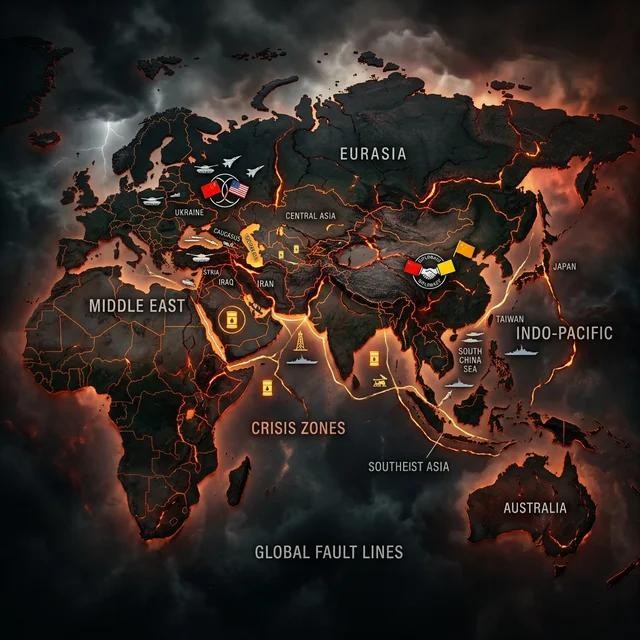
A lot of answers to the world we are watching today (who benefits, why things are unfolding this way, and why everything feels disturbingly familiar) can be found in a single book written in 1997: Alexander Dugin's Foundations of Geopolitics.
This isn't hindsight. It's alignment.
Dugin's book argues, in essence, that Ukraine cannot exist as a sovereign, European state and should be absorbed into Russia's sphere. That the UK should be cut off from Europe to weaken both. That NATO and Atlanticism must be rejected. That the United States should be destabilised from within and distanced from Europe. Liberalism, Western values, pluralism and democratic culture have no place in this worldview. They are to be replaced by authoritarian "civilizational blocs".
Now look at reality. Brexit. Systematic internal attacks on the EU. Constant narratives portraying NATO as obsolete or dangerous. Deep political radicalization and institutional paralysis in the US. The outcomes converge with the blueprint, whether by design or not.
Trump's role fits this logic, whether intentional or not. His rhetoric and policies undermined trust in democratic institutions, attacked NATO, questioned alliances, normalized authoritarian leaders, and pushed the US toward inward-looking isolation. That trajectory serves the Eurasianist vision Dugin described: distancing America from Europe and hollowing out the liberal order from within.
This doesn't require conspiracy or coordination. Interests can align without formal alliances. Dugin never argued that Russia must control the West, only that it must exploit its internal divisions. And that is exactly what we are witnessing: the erosion of the post-Cold War order, replaced by transactional politics, spheres of influence, and the return of imperial logic.
Ukraine sits at the center of this struggle. The war is not only about territory. It is about erasing Ukrainian identity itself. This is not Russia "reacting" to the West. It is Russia executing a long-term ideological strategy.
As for influence: Russia does not control events directly, that's a myth. Its power lies in asymmetric influence: financing extremist movements, information warfare, exploiting social fractures, energy leverage, cyber operations, and amplifying weaknesses that already exist. It doesn't need to create chaos. It only needs to push where cracks are already visible.
Dugin didn't predict the world. He explained how to destabilize it.
The ideology driving the Kremlin today is heavily influenced by Dugin's worldview. In that framework, this war is not about territory, trade, or security. It is a civilizational war. The West is not seen as a partner, but as an existential enemy. Liberal values, cooperation, cultural exchange, and "win-win" solutions are viewed as tools of Western dominance, not as benefits. Compromise equals weakness. Peace without victory equals defeat. Ukraine, in this ideology, has no legitimate right to exist as a sovereign Western-aligned state. Its survival would mean the failure of Russia's historical mission.
That is why losses of young men, economic damage, sanctions, and isolation are considered acceptable sacrifices. Reputation among Western leaders is irrelevant, even undesirable. Isolation from the liberal world is seen as moral purity, not punishment. So offers of trade, student exchanges, art, science, or restored prestige simply miss the point. They speak the language of liberal rationality to a system that openly rejects it.
This is not a misunderstanding. It is a fundamental clash of worldviews.
And there is an important question raised by Dugin's worldview: what happens when another great power begins using the same historical logic?
China, Russia's supposedly "helpful" friend, has its own historical grievances over territories once controlled by the Qing Empire, including Outer Manchuria, much of which is now part of Russia's Primorsky and Khabarovsk regions. That does not mean China is about to reclaim those territories, but it exposes the danger of treating historical maps as a legitimate basis for modern territorial claims. If one power can invoke history to justify changing borders by force, what principle prevents another from doing the same?
1Alexander Dugin: the narrative and why it fails
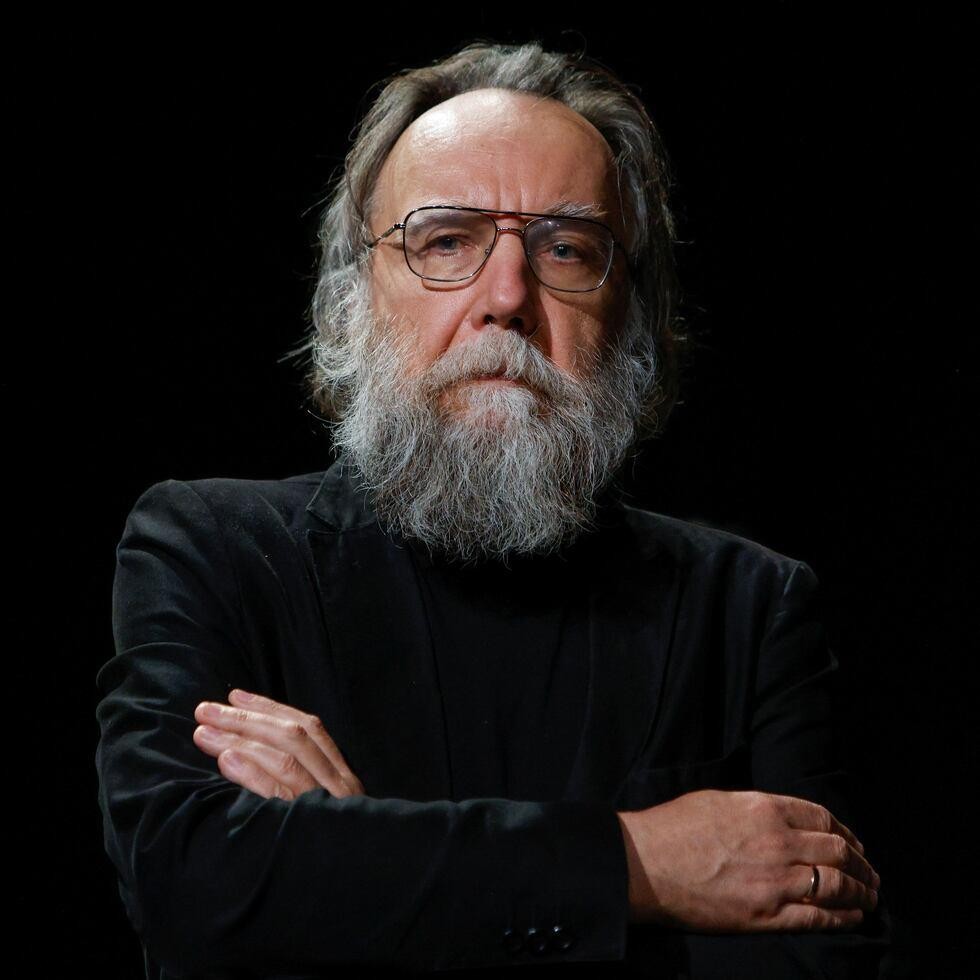
Alexander Dugin, a Russian ideologue, laid out his worldview in Foundations of Geopolitics: The Geopolitical Future of Russia (1997). The book was written before Putin came to power and barely mentions him, but parts of its narrative were later adopted and repackaged by the Kremlin. Dugin is not Russia's strategist; he is an ideological instrument.
Dugin's core narrative: Russia is not just a state, but a unique "civilization" with the right to expand its influence over territories it considers historically, culturally, or strategically its own. From this premise follows the claim that some countries should not exist as fully sovereign states. Within this framework:
- Ukraine is portrayed as an "artificial state" that must be divided, neutralized, or absorbed.
- The EU is depicted as a weak construct controlled by the United States and meant to be dismantled from within.
- NATO is falsely framed as an aggressor, despite never attacking Russia.
- The Balkans are seen as a natural sphere of Russian influence, especially Serbia.
- There are references to access to warm seas, including indirect access to the Adriatic.
- Poland and the Baltic states are treated as temporary or historical mistakes.
- A "multipolar world" is presented as more just and peaceful.
2Why this narrative is false and dangerous
Civilization is not a legal category. International order is based on states, borders, and sovereignty. If "civilizational rights" justified conquest, no border on Earth would be stable. This is classic imperial logic from the 19th century.
Ukraine is a sovereign state. Ukraine is internationally recognized, a UN member, and its borders were explicitly acknowledged by Russia. There is no legal, security or moral justification for invasion.
NATO is a consequence, not a cause. NATO expanded because countries sought protection after historical experiences with Russian domination. NATO did not attack Russia; Russia attacked its neighbors.
The EU is not Russia's enemy. For decades, the EU cooperated with Russia, bought its energy, and invested economically. Weakening the EU is not self-defense; it is an attempt to dominate fragmented states.
The Balkans and the Adriatic are fantasy, not strategy. Russia lacks the economic, military, and logistical capacity for real control over the Balkans or the Adriatic. The "Russian Balkans" exist only in propaganda.
Multipolarity without rules leads to chaos. History shows that the bloodiest wars occurred in multipolar systems without clear rules. Multiple powers without law do not create peace, but the rule of force.
3Conclusion
Dugin does not describe the world as it is, but as empires wish it to be. His narrative is not meant to prevent war, but to justify it. Russia is not a victim in Ukraine; it is the aggressor. The same applies to any state that uses force to impose its will, whether Russia, the United States, or Israel.
Geopolitics may explain interests, but it must never justify war.
Source: Velaris Brief