Zelensky Did Not Give Away 25% of Ukraine. He Offered a Ceasefire, and Moscow Rejected the Terms.
The difference between freezing a front line and surrendering sovereign territory is not a technicality. It is the central issue in the latest negotiations over Ukraine.
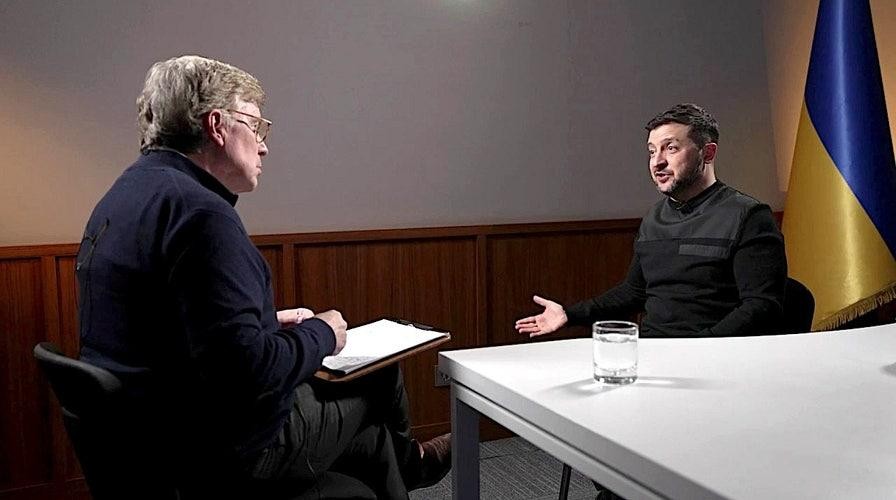
A familiar claim is spreading across social media: Volodymyr Zelensky has supposedly agreed to hand over a quarter of Ukraine to Russia.
That is not what happened.
On October 21, Zelensky reiterated that Ukraine was prepared to halt fighting along the existing front line and move toward negotiations backed by American and European security guarantees.
He did not recognize Russian sovereignty over occupied Ukrainian territory. He did not agree to withdraw Ukrainian troops from the remaining Ukrainian-held cities of Donetsk. And he did not sign away a quarter of his country.
What he offered was a ceasefire.
What Moscow continues to demand goes considerably further.
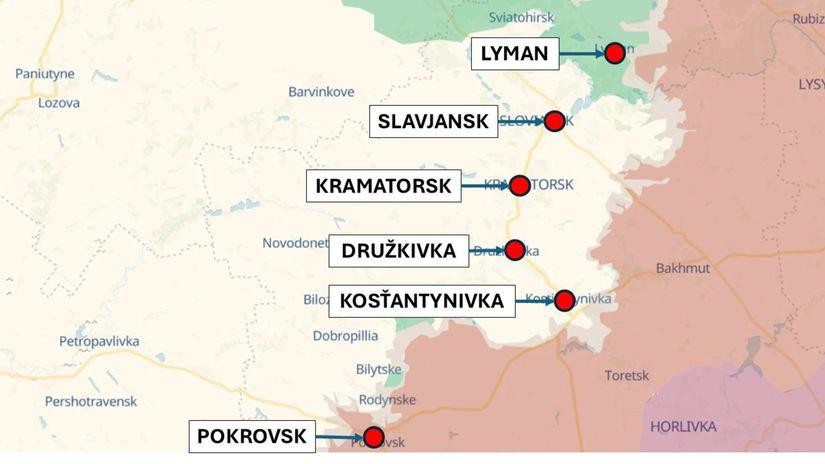
1A ceasefire is not territorial surrender
Freezing the current front line would mean stopping military operations at the positions held by the two armies when a ceasefire takes effect.
It would not, by itself, settle the legal status of occupied territory.
That distinction matters.
A ceasefire can leave territorial disputes unresolved. Internationally recognized borders do not automatically change because military forces temporarily stop advancing.
Russia currently occupies roughly one-fifth of Ukraine, including Crimea and territories seized since 2014. Claims that Zelensky has simply given away 25% of the country confuse military occupation, proposed ceasefire arrangements and formal territorial concessions.
Ukraine's position is that its internationally recognized territory remains Ukrainian, even where Russia exercises military control.
Nor was Zelensky's proposal a sudden reversal. The Institute for the Study of War notes that he has publicly entertained freezing the current front line as a first step toward ending the fighting since November 2024.
2What Moscow actually wants
Russia has not accepted Ukraine's proposed ceasefire on the current lines.
Instead, the Kremlin continues to insist on conditions that include Ukrainian withdrawal from territory Russia has not conquered, particularly the remaining Ukrainian-held parts of Donetsk Oblast.
This is the crucial difference.
Kyiv proposes stopping the fighting where the armies currently stand.
Moscow demands territorial concessions before an acceptable settlement can be reached.
Russia has agreed in principle to resume trilateral negotiations with Ukraine and the United States in November. That is a diplomatic opening, but it is not acceptance of the ceasefire proposal.
On October 21, senior Kremlin officials dismissed the Ukrainian and European proposals as inadequate. Kremlin spokesperson Dmitry Peskov reiterated that Russia wanted a peace agreement rather than merely a ceasefire.
The disagreement is therefore not simply about when the shooting stops. It is about what Ukraine would have to surrender to make it stop.
3The Fortress Belt: the territory Russia has failed to capture
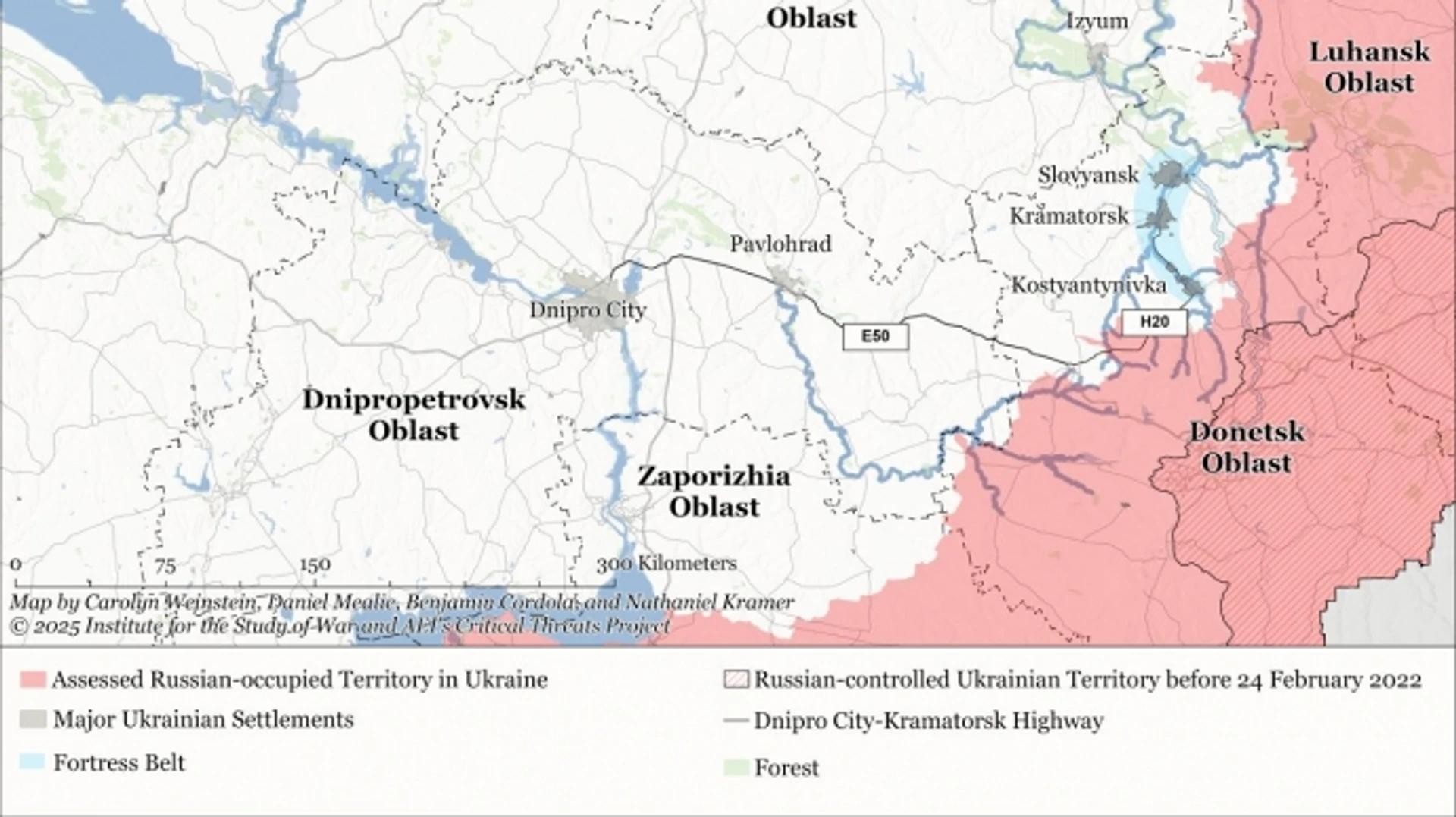
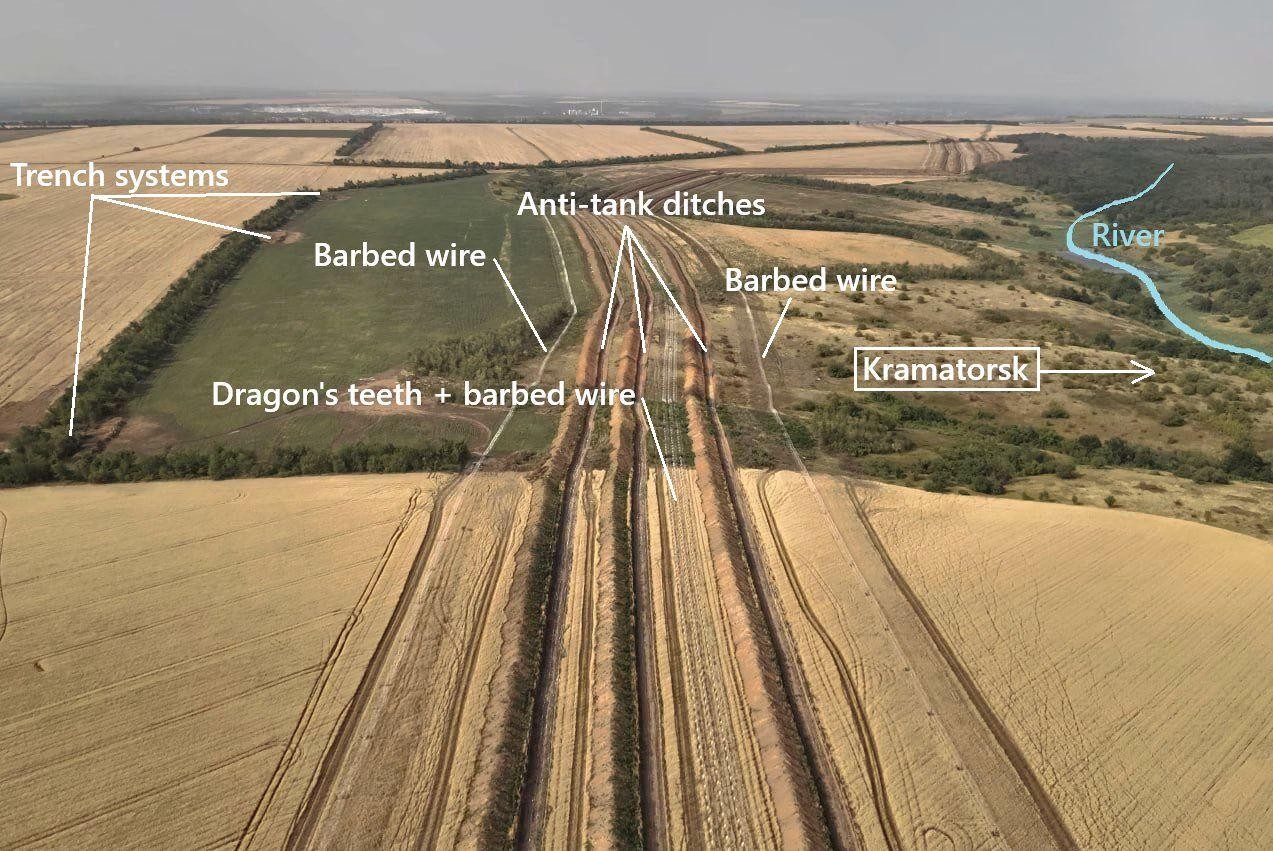
The central military issue is Ukraine's defensive network in Donetsk, commonly known as the Fortress Belt.
It includes the strategically important urban and defensive areas around Sloviansk, Kramatorsk, Druzhkivka and Kostiantynivka.
These are not interchangeable pieces of territory on a diplomatic map.
They form an interconnected defensive system developed over years, supported by urban infrastructure, transportation routes, logistical facilities and prepared military positions.
For Russia, capturing this belt would represent a major strategic achievement.
For Ukraine, abandoning it without a battle would mean surrendering defensive advantages that Russian forces have struggled to overcome militarily.
A political agreement requiring Ukrainian withdrawal from these positions would therefore achieve something Russian military operations have repeatedly failed to accomplish.
And that brings us to an extraordinary finding.
4Sixteen deadlines, and still no complete conquest of Donetsk
According to ISW's October 21 assessment, Vladimir Putin has set no fewer than 16 deadlines since 2022 for Russian forces to seize Donetsk Oblast.
Russian forces have failed to meet every one of them.
The same assessment reports that Ukrainian forces have liberated approximately 1,080 square kilometres of territory during 2026, while Russia's net territorial gains since the beginning of the year were approximately 73 square kilometres, based on the evidence available to ISW at that point.
Ukraine's Operation Vivaldi in the Lyman direction reportedly liberated at least 277 square kilometres and disrupted a planned Russian approach toward the northern side of the Fortress Belt.
These figures do not mean Russia has ceased to pose a serious military threat. Russian forces continue attacking, and battlefield conditions remain dangerous and fluid.
But they do challenge the assumption that the fall of Ukraine's remaining Donetsk defenses is inevitable.
Russia is demanding through negotiations territory that its army has not been able to secure through years of warfare.
That is not a minor negotiating detail. It is the strategic heart of the dispute.
5Did Zelensky expect Putin to refuse?
There is another dimension to this proposal: diplomacy.
Zelensky's willingness to accept a ceasefire along existing lines may also serve a political purpose.
By accepting the principle of an immediate halt to fighting without recognizing Russian territorial claims, Kyiv demonstrates that it is prepared to pursue a negotiated reduction in hostilities.
That position places the next decision before Moscow.
If Russia rejects a ceasefire unless Ukraine first abandons additional territory, the disagreement becomes clearer to Washington, European governments and the international public.
This may be part of Zelensky's diplomatic calculation.
However, there is no public evidence establishing that he made the proposal solely because he knew Putin would reject it. That remains an interpretation, not a verified account of his intentions.
The observable result is nevertheless significant: Ukraine has offered to stop fighting on the existing lines, while Russia continues to insist on broader territorial demands.
6Negotiations continue. The fundamental disagreement remains.
Moscow's willingness to attend another round of talks should not be confused with acceptance of Kyiv's terms.
The proposed November negotiations may address security arrangements and possible steps toward ending the war.
But the central question remains unresolved.
Will Russia accept a ceasefire without requiring Ukraine to surrender territory it still controls?
And can Ukraine obtain security guarantees strong enough to prevent a temporary pause from becoming preparation for another offensive?
Those questions will determine whether negotiations can produce something more durable than another diplomatic announcement.
The bottom line
Zelensky did not give away 25% of Ukraine.
He expressed willingness to stop the fighting along the current front line and negotiate from there.
That would leave Russia occupying Ukrainian territory in practice, but it would not automatically transform occupation into internationally recognized sovereignty.
Moscow's continued demand for the rest of Donetsk is fundamentally different: it would require Ukraine to relinquish positions and cities that Russia has not captured.
And behind those demands stands the Fortress Belt, one of the most strategically important defensive systems in Ukraine.
A ceasefire freezes military positions. A territorial surrender changes who controls the land. Legal recognition of annexation is yet another, separate decision.
Confusing those three things does not clarify the peace process.
It obscures what the two sides are actually being asked to accept.
Sources: Institute for the Study of War (October 21-22, 2026); Reuters (October 22-23); Associated Press (October 22); Euronews (October 21); Anadolu Agency (October 21).
Source: Velaris Brief