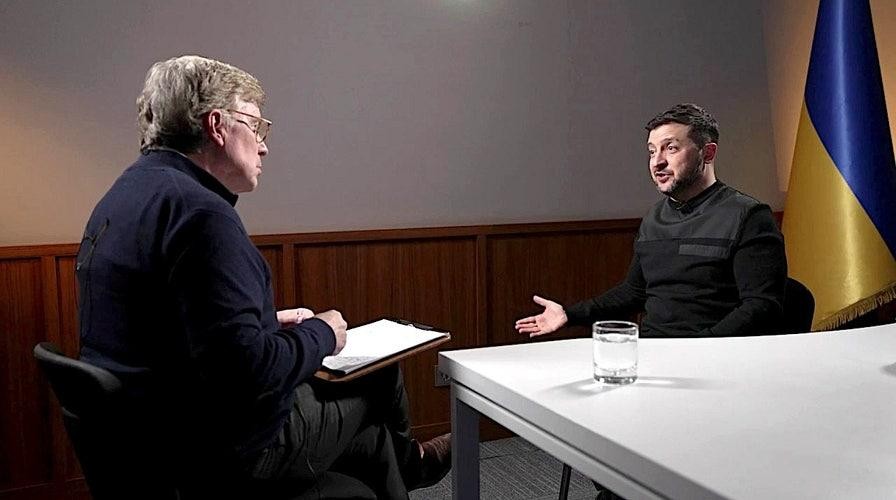
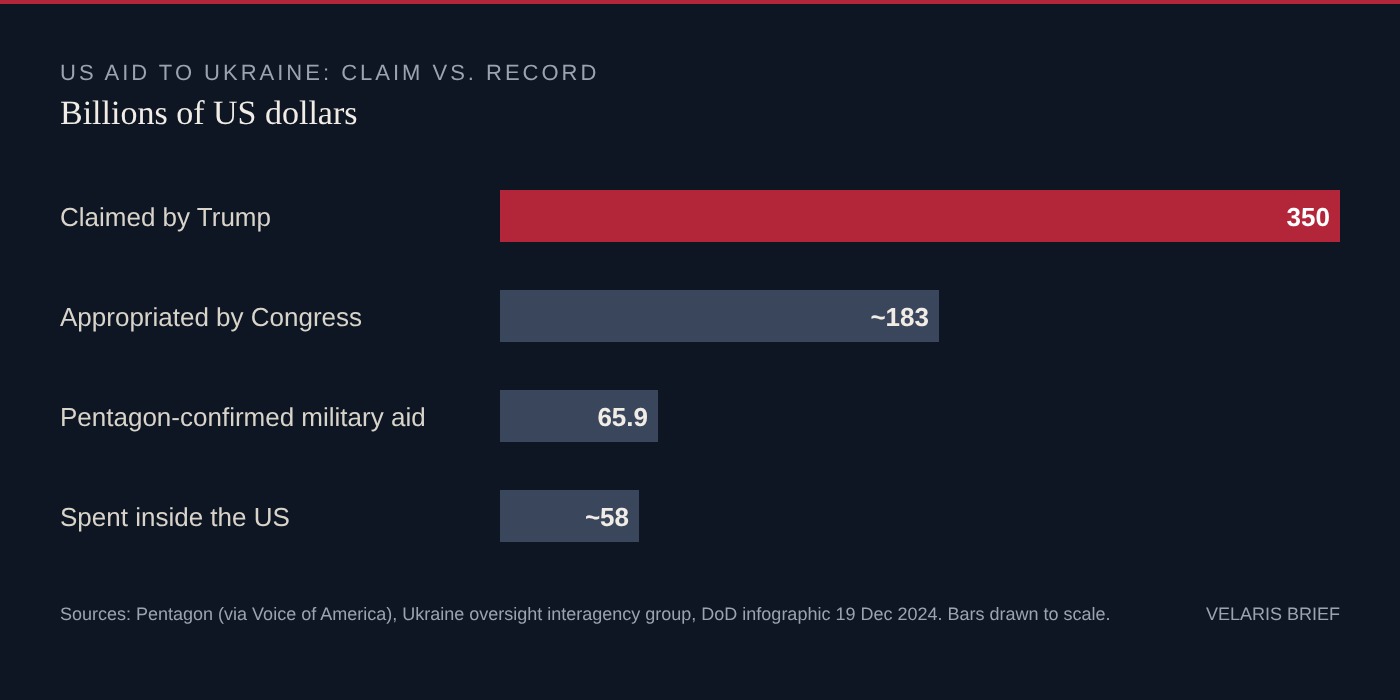
Ukraine as a Bargaining Chip? Washington, Moscow and the Price of a Deal
As Washington and Moscow explore lucrative economic opportunities, a fundamental question emerges: Can commercial diplomacy end Russia's war against Ukraine, or could it turn the sovereignty of a European nation into the price of a geopolitical bargain?
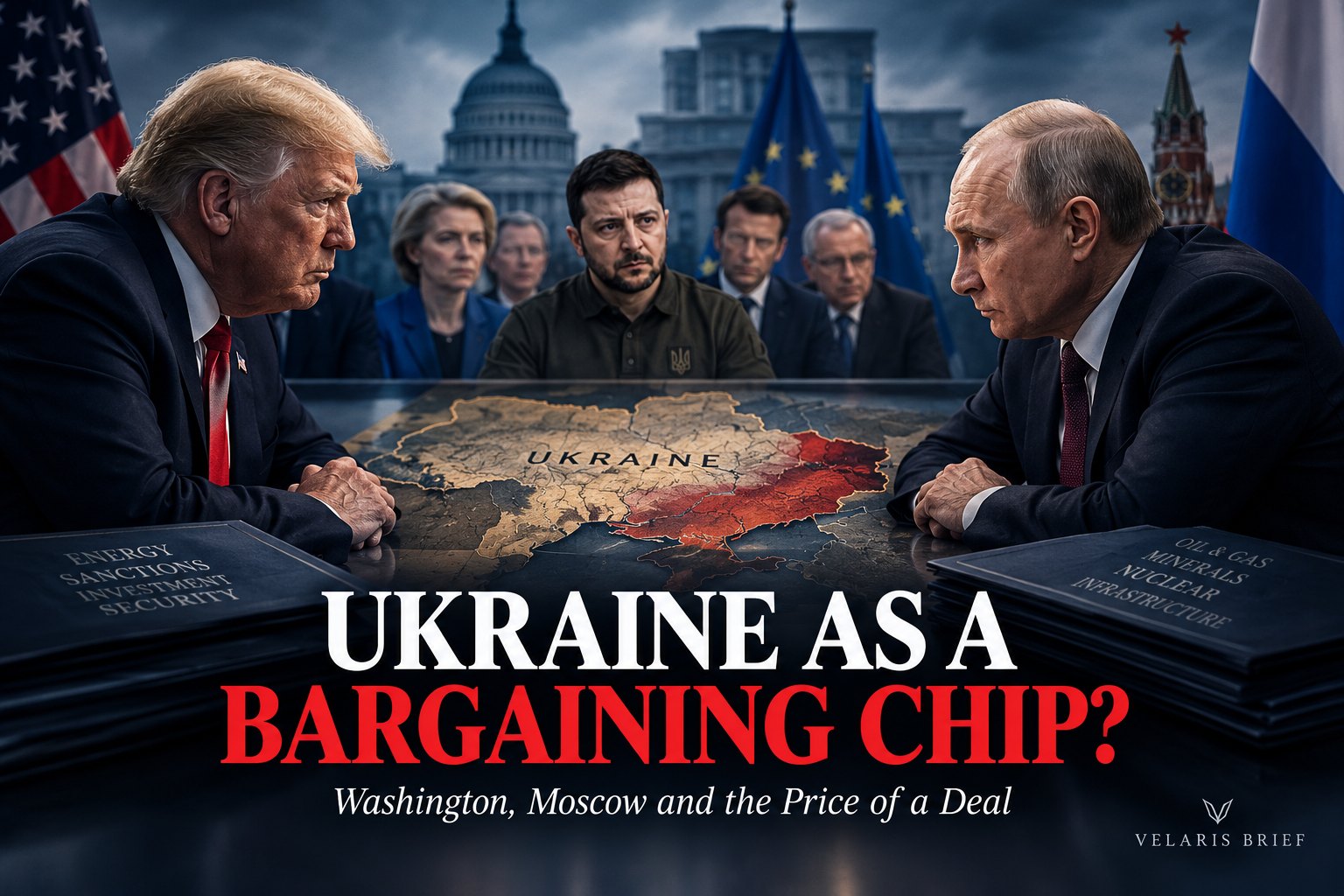
THE PRICE OF PEACE — AND THE PRICE OF A DEAL
A new dimension is emerging in the negotiations surrounding Russia's war against Ukraine.
Alongside discussions about ceasefires, territorial disputes and security guarantees, Washington and Moscow are exploring potential economic arrangements involving energy, aviation, strategic resources and infrastructure.
The proposals could reshape relations between the United States and Russia. They could also affect Ukraine's sovereignty and Europe's security architecture.
Reporting by the Financial Times and Le Monde on October 27 and 28 reveals how commercial opportunities have become an increasingly prominent element of diplomatic engagement with Moscow.
The central question is not whether economic incentives have a legitimate place in peace negotiations. They do.
The question is whether those incentives are being offered in exchange for verifiable Russian concessions — or whether economic normalisation could advance while the underlying causes of the war remain unresolved.
A settlement that makes aggression economically rewarding would establish a dangerous precedent far beyond Ukraine.
1THE BUSINESS OPPORTUNITIES BEHIND THE DIPLOMACY
According to the Financial Times, American and Russian officials have discussed potential commercial arrangements involving renewed US participation in Russian oil production, natural gas cooperation, titanium supplies and aviation.
Other reported possibilities include Russian oil deliveries through the Druzhba pipeline, investment in Russian energy assets and arrangements concerning the Russian-occupied Zaporizhzhia nuclear power plant.
These are proposals under discussion, not completed agreements.
Washington maintains that economic opportunities would depend on a comprehensive peace settlement.
That distinction is essential.
Nevertheless, the scope of the discussions suggests an attempt to make economic cooperation a central incentive for Moscow.
The underlying diplomatic calculation is straightforward: Russia might become more willing to compromise if the benefits of peace appear greater than the benefits of continuing the war.
But that assumption remains unproven.
The Kremlin's objectives have consistently involved more than economic considerations.
Russia has sought territorial concessions, restrictions on Ukraine's security choices and recognition of a privileged Russian role in determining Ukraine's future.
Economic opportunities alone may not persuade Moscow to abandon those ambitions.
2KIRILL DMITRIEV AND THE COMMERCIAL DIPLOMACY STRATEGY
An investigation published by Le Monde on October 27 identifies Kirill Dmitriev, head of the Russian Direct Investment Fund, as a central figure in promoting closer economic relations between Moscow and Washington.
Dmitriev has cultivated relationships with American political and business figures, presenting commercial cooperation as a pathway toward ending the conflict.
The investigation describes discussions involving Steve Witkoff and Jared Kushner, including proposals for a broader regional prosperity framework.
Such an approach reflects a familiar diplomatic argument: economic interdependence can create incentives for stability.
However, the effectiveness of that strategy depends on the political conditions attached to economic cooperation.
If Moscow receives commercial benefits before accepting meaningful obligations, the incentives may operate in the opposite direction.
Russia could gain economically while maintaining its military and political demands.
That possibility does not establish that Washington intends to sacrifice Ukraine.
It does, however, demonstrate why transparency, sequencing and enforceable conditions are indispensable.
3THE DIESEL AGREEMENT AND THE QUESTION OF LEVERAGE
Le Monde reports that an October agreement concerning Russian diesel supplies intensified Ukrainian concerns about Washington's approach.
According to the newspaper's investigation, Ukrainian representatives objected to the prospect of economic cooperation that could benefit Russia while the war continued.
The report also describes American pressure concerning Ukrainian attacks on Russian refineries.
These accounts raise a critical strategic question.
Energy infrastructure has become an important component of the economic confrontation between Russia and Ukraine.
Ukrainian strikes against Russian refineries have sought to impose costs on Moscow's war economy.
Restricting those operations while easing commercial pressure on Russia could alter the balance of leverage.
That conclusion remains an assessment of potential consequences rather than proof of Washington's intentions.
The decisive issue is whether any reduction in pressure produces corresponding Russian concessions.
Without such reciprocity, economic engagement risks becoming a benefit for Moscow rather than an instrument for achieving peace.
4MOSCOW'S DEMANDS REMAIN THE CENTRAL OBSTACLE
Despite renewed diplomatic activity, there is little publicly demonstrated evidence that Russia has abandoned its fundamental demands.
The Financial Times reported on October 28 that Vladimir Putin devoted much of a conversation with Finnish President Alexander Stubb and Norwegian Prime Minister Jonas Gahr Støre to his interpretation of Russian and Ukrainian history.
The immediate question of a ceasefire reportedly received comparatively limited attention.
The Kremlin continues to insist that any settlement must account for Russian interests.
The difficulty is that Moscow's stated interests have repeatedly included demands incompatible with Ukraine's unrestricted sovereignty.
Historical narratives cannot provide legal justification for territorial conquest.
Cultural connections between nations do not establish ownership of another state's territory.
Nor can the military occupation of internationally recognised Ukrainian territory create legitimate sovereign rights.
Ukraine's independence is not a historical misunderstanding to be corrected through negotiations between larger powers.
It is a legal and political reality protected by the principles of the United Nations Charter.
5ZAPORIZHZHIA: A TEST OF SOVEREIGNTY
Among the proposals reported by the Financial Times is a possible arrangement involving American management of the Russian-occupied Zaporizhzhia nuclear power plant.
The facility is located on internationally recognised Ukrainian territory.
Its occupation by Russian forces does not transfer Ukrainian sovereignty to Moscow.
International involvement in nuclear safety could be beneficial.
But any management arrangement would need to preserve Ukraine's legitimate rights and prevent military occupation from becoming a source of permanent economic advantage.
The central questions are therefore political as well as technical.
Who would authorise the arrangement?
Who would receive the electricity and economic benefits?
Would Ukrainian sovereignty remain fully protected?
And would the agreement facilitate the restoration of Ukrainian control or normalise the consequences of occupation?
Without satisfactory answers, a technically attractive proposal could carry serious strategic costs.
6EUROPE CANNOT BE REDUCED TO AN OBSERVER
The emerging negotiations also expose a fundamental problem for European security.
Several reported proposals would directly affect European energy markets, sanctions and infrastructure.
The United States and Russia cannot independently determine every aspect of European sanctions policy or energy arrangements.
European governments retain authority over their own decisions and obligations.
Moreover, Europe would bear substantial consequences if a poorly designed settlement failed to prevent renewed Russian aggression.
The recent diplomatic contact involving Finland, Norway and Russia illustrates both the need for communication and the difficulty of maintaining a coordinated European position.
Direct diplomacy is not inherently a concession.
But fragmented diplomacy can weaken collective leverage.
Europe needs a coherent position based on Ukrainian sovereignty, credible security guarantees and clearly defined conditions for any economic normalisation.
Most importantly, Ukraine must remain a participant in decisions affecting its own territory and political future.
There can be no legitimate settlement of Ukraine's future without Ukraine.
7THE ARGUMENT FOR ECONOMIC DIPLOMACY
A serious assessment must also acknowledge the arguments supporting Washington's approach.
Economic incentives have played important roles in previous diplomatic settlements.
Sanctions relief can encourage compliance.
Investment can support reconstruction.
Commercial relationships can increase the economic cost of renewed conflict.
A negotiated settlement may require difficult compromises.
Rejecting every form of economic engagement would therefore be neither realistic nor necessarily constructive.
The essential issue is the structure of the agreement.
Economic benefits should be linked to specific obligations.
Those obligations must be verifiable.
Violations must carry consequences.
And any settlement must address the security conditions that allowed the war to develop and continue.
A diplomatic framework that satisfies these requirements could contribute to a sustainable peace.
One that provides benefits without enforceable commitments could undermine it.
8THREE POSSIBLE OUTCOMES
The current negotiations could develop in several directions.
A conditional peace settlement
Washington uses economic incentives to secure meaningful Russian concessions, with Ukraine participating directly in the negotiations.
Security guarantees are established, European interests are represented, and sanctions relief follows verified compliance.
This would represent a genuine diplomatic achievement.
Economic normalisation without a durable settlement
Commercial cooperation advances while disputes over territory and Ukrainian security remain unresolved.
Moscow obtains economic advantages without abandoning its central political objectives.
Ukraine and its European partners face a potentially weaker strategic position.
Prolonged negotiations without meaningful concessions
Russia continues diplomatic engagement while maintaining military pressure.
The possibility of future commercial agreements creates uncertainty about Western sanctions and support for Ukraine.
Negotiations become a means of managing international pressure rather than ending the conflict.
These scenarios are assessments, not predictions.
Their likelihood depends on future decisions and developments that remain uncertain.
9WHAT IS CONFIRMED — AND WHAT REMAINS AN ASSESSMENT?
Documented reporting establishes that:
American and Russian representatives have discussed potential economic cooperation connected to peace negotiations.
The proposals reportedly cover multiple strategic industries.
Kirill Dmitriev has actively promoted commercial engagement with Washington.
European governments have expressed resistance to premature economic normalisation.
Russia has not publicly demonstrated a fundamental abandonment of its principal demands concerning Ukraine.
What has not been established:
There is no confirmed comprehensive agreement exchanging Ukrainian territory for American-Russian economic cooperation.
The reported proposals do not prove that Washington has formally accepted Russian territorial claims.
There is insufficient evidence to conclude that commercial considerations alone determine American policy.
The eventual outcome of negotiations remains uncertain.
The central geopolitical assessment is that economic incentives offered without enforceable Russian concessions could weaken Ukraine's negotiating position and undermine European security.
That is a risk to be evaluated — not an accomplished outcome.
10THE INTERNATIONAL PRECEDENT
The consequences of a settlement extend beyond the immediate conflict.
International stability depends partly on the principle that states cannot legitimately acquire territory through military aggression.
If economic normalisation follows territorial conquest without meaningful accountability, other governments may draw dangerous conclusions.
They may calculate that military force can create bargaining advantages that diplomacy alone cannot achieve.
This would not automatically produce identical conflicts elsewhere.
But it could weaken the credibility of the international rules designed to protect sovereign states.
The challenge facing Washington is therefore larger than obtaining an agreement with Moscow.
It is ensuring that the agreement does not undermine the principles required for lasting peace.
VELARIS BRIEF | FINAL ASSESSMENT
The United States has the diplomatic and economic influence to play a decisive role in ending Russia's war against Ukraine.
Economic incentives may be part of that effort.
But their legitimacy depends on what they achieve.
A sustainable agreement must preserve Ukrainian sovereignty, establish credible security arrangements and prevent renewed aggression.
It must also recognise that Europe's security cannot be determined exclusively through negotiations between Washington and Moscow.
The emerging commercial discussions are significant.
Their final outcome remains uncertain.
There is no established basis for claiming that Ukraine has already been traded away.
There is, however, sufficient reason to scrutinise a negotiating approach in which economic opportunities for Russia could advance faster than meaningful concessions from the Kremlin.
Peace cannot be measured by the commercial value of an agreement.
It must be measured by the security and independence that agreement protects.
The question is not simply whether Washington and Moscow can make a deal.
It is whether they can make peace without making aggression profitable.
SOURCES
Financial Times — October 28, 2026
Washington discusses Russian deals for US oil majors in Ukraine peace talks.
Vladimir Putin lectures Nordic leaders on Russian history.
Le Monde — October 27, 2026
Derrière le revirement de Donald Trump en faveur de la Russie, les promesses d'affaires juteuses de Kirill Dmitriev, l'habile VRP de Vladimir Poutine.
Le Monde — October 27–28, 2026
Live reporting on the war in Ukraine and European diplomatic developments.
Editorial methodology: Reported proposals and attributed accounts are distinguished from completed agreements and independently established facts. Strategic conclusions represent the editorial analysis of Velaris Brief.
Source: Velaris Brief